Trial amounts
NAD+ dosage in human trials
A study amount comes attached to a population and a duration. Removing those particulars makes the number much less useful.
NR in healthy overweight adults
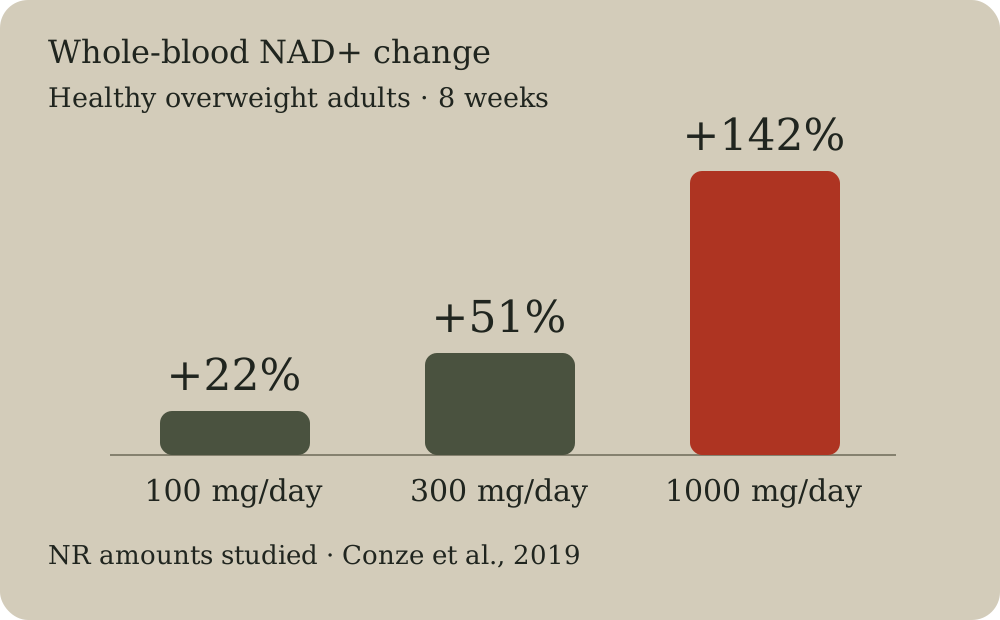
The randomized NR trial gave healthy overweight adults 100, 300, or 1000 mg/day for 8 weeks. Whole-blood NAD+ rose by 22%, 51%, and 142%, respectively, with the elevation maintained during the study. No significant adverse-event differences from placebo were reported.
I appreciate having these figures together because the largest blood increase otherwise steals the whole story. Every figure below describes an arm of this trial.
The bars show whole-blood NAD+ changes during this trial. The largest bar measures the largest blood increase.
NMN in healthy middle-aged adults
The 60-day NMN trial tested 300, 600, and 900 mg/day. Blood NAD+ was higher at days 30 and 60 in all NMN groups compared with placebo. Walking distance and quality-of-life scores also improved; the authors identified 600 mg/day as optimal within the amounts and outcomes they tested.
That last qualification is essential. “Optimal” here describes this trial's comparison, whose participants were healthy middle-aged adults.
NMN in prediabetic postmenopausal women
A 10-week NMN trial in prediabetic postmenopausal women used 250 mg/day. Muscle insulin sensitivity improved, while body composition and HbA1c, a longer-term measure of blood sugar, were unchanged.
The outcomes of this study resist a single success-or-failure label. One carefully measured metabolic function improved while other outcomes stayed put.
Pills, injections and timing
These trials used oral precursors. The review of human precursor supplementation provides no basis for turning their results into a universal NAD+ regimen. This page gives no personal dose, injection schedule or preferred hour of use.
Intravenous NAD+ has much less controlled evidence, and compounded preparations carry additional quality risks. Those issues are covered under NAD injection and IV therapy.